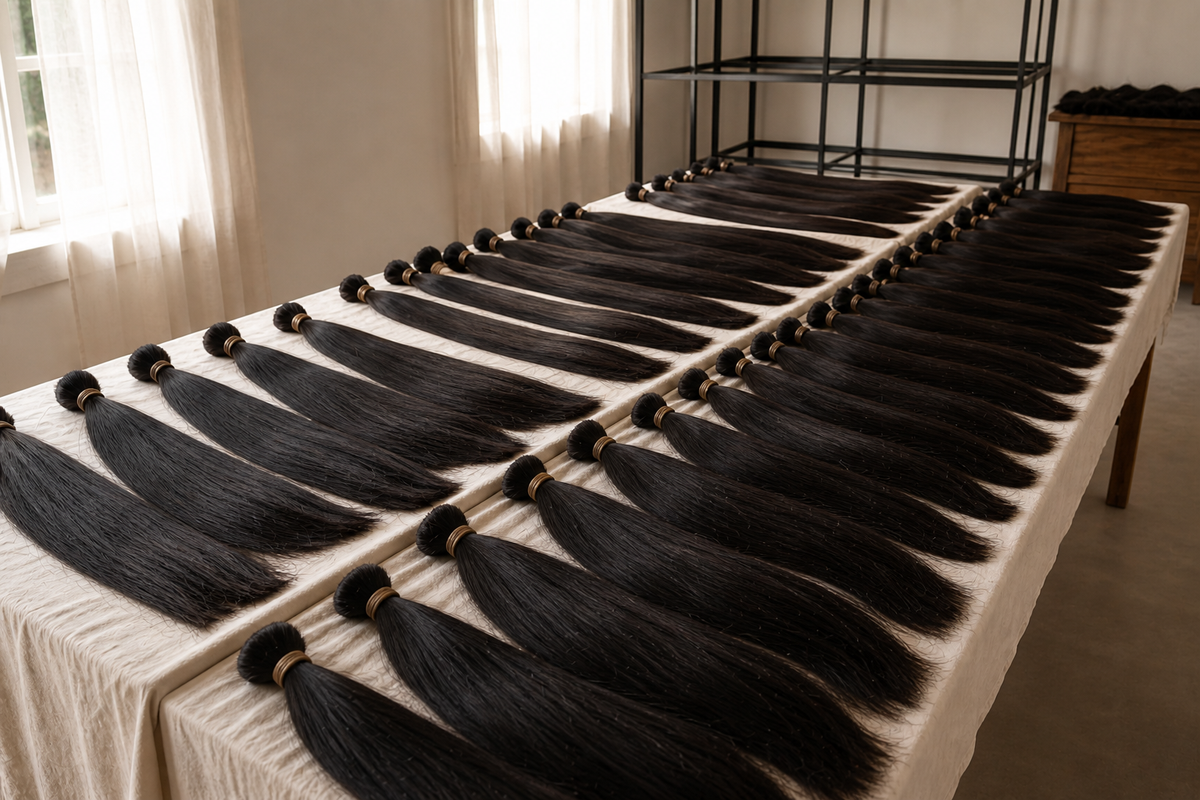
Double Drawn vs Single Drawn Hair: What’s the Real Difference?
If you have ever shopped for hair extensions, you have probably seen the terms double drawn hair and single drawn hair. At first, they sound a little technical, especially if you just want hair that looks full, soft, and natural.
But the difference is actually simple.
Single drawn hair has a natural mix of long and shorter strands, so the ends look softer and more tapered. Double drawn hair has more strands that reach the same length, so the ends look fuller, thicker, and more polished.
In this guide, I’ll break down Double Drawn vs Single Drawn Hair in a practical way. I’ll explain what each one means, how they look, who they suit, how the price differs, and how to choose the right option before you buy.
What Does “Drawn Hair” Mean in Hair Extensions?
In hair extensions, the word “drawn” refers to how workers sort the hair by length.
Natural human hair never grows in one perfect length. Even if someone has long hair, that hair still contains shorter strands, medium strands, and longer strands. When suppliers collect raw hair, they sort those strands to create different fullness levels.
That sorting process affects the final look of the hair extensions.
If the bundle keeps more natural length variation, the ends look thinner and softer. If workers remove many of the shorter strands, the ends look fuller and thicker.
So when you compare Double Drawn vs Single Drawn Hair, you mainly compare the density from top to bottom.
This matters because the drawn type changes the way hair extensions blend, move, feel, and style. It also affects the price. A fuller bundle usually needs more long hair and more sorting work, so it costs more.
One important thing to remember: drawn type does not automatically mean hair quality. It only tells you how full the hair looks through the length. Hair quality depends on the raw hair source, cuticle direction, processing, softness, shedding, tangling, and lifespan.
What Is Single Drawn Hair?
Single drawn hair contains a natural mix of different strand lengths inside one bundle, weft, tape-in pack, or extension set.
For example, if you buy 20-inch single drawn hair, not every strand reaches the full 20 inches. Some strands may reach 20 inches, while others may measure 18 inches, 16 inches, 14 inches, or even shorter.
This gives single drawn hair a naturally tapered shape.
The top part of the hair usually looks fuller, while the ends look lighter and softer. This type of hair often gives a more natural everyday look because real hair usually has thinner ends too.
Single drawn hair can work beautifully for someone who wants length without a heavy, dramatic finish. It gives movement, softness, and a more relaxed shape. It can also feel lighter on the head, which matters a lot if you have fine hair or a sensitive scalp.
I often see single drawn hair suit people who want a natural blend rather than a big transformation. If your natural hair has soft layers, medium density, or fine ends, single drawn hair may blend more easily than a very thick double drawn bundle.
But single drawn hair has one clear downside: the ends may look too thin if you want a very full look.
This becomes more obvious in longer lengths. A 24-inch single drawn bundle may look noticeably thinner near the bottom than a 24-inch double drawn bundle. If you want long, thick, glamorous hair, single drawn hair may not give enough fullness through the ends.
What Is Double Drawn Hair?
Double drawn hair contains a higher percentage of strands that reach the full advertised length.
In simple terms, workers remove many shorter strands from the bundle. This gives the hair a fuller shape from top to bottom.
If you buy 20-inch double drawn hair, most of the strands stay close to 20 inches. The ends look thicker, denser, and more even. This creates the polished, full-end look many people want from professional hair extensions.
Double drawn hair usually looks more luxurious in photos and videos because the bottom line has more density. It gives that “salon-finished” result with fewer wispy ends.
This type of hair works especially well for people who want:
- Fuller ends
- More volume
- A dramatic transformation
- Long hair that does not look thin at the bottom
- A polished, high-density style
Double drawn hair usually costs more because it requires more long strands. Long human hair already carries more value than shorter hair. When workers remove shorter pieces, they need more raw material to create the same final weight.
For example, a 100g double drawn bundle may need more raw hair than a 100g single drawn bundle because the final hair must contain more full-length strands.
But double drawn hair does not suit everyone.
Because it feels denser, it can feel heavier. Someone with very fine or thin natural hair may struggle to hide thick extension ends. Too much density can also make the install feel bulky if the stylist does not choose the right method, placement, or gram weight.
Also, double drawn hair does not automatically mean better hair quality. It only means fuller ends. A poor-quality double drawn bundle can still tangle, shed, or dry out after washing.
Double Drawn vs Single Drawn Hair: Main Differences
The biggest difference between Double Drawn vs Single Drawn Hair comes down to fullness.
Single drawn hair has more natural length variation, so the ends look lighter and more tapered. Double drawn hair has more equal-length strands, so the ends look thicker and fuller.
Here is a simple comparison:
| Feature | Single Drawn Hair | Double Drawn Hair |
|---|---|---|
| Fullness | Fuller at the top, thinner at the ends | Full from top to bottom |
| Ends | Soft, tapered, natural | Thick, dense, polished |
| Weight | Lighter | Heavier |
| Look | Natural and soft | Glamorous and full |
| Price | Usually more affordable | Usually more expensive |
| Best for | Fine to medium hair, natural looks | Thick hair, long lengths, full installs |
| Styling result | Airy and blended | Dense and salon-finished |
The length also changes how obvious the difference looks.
In shorter extensions, single drawn hair may still look full enough. In longer extensions, the thinner ends can stand out more. For example, 18-inch single drawn hair may blend softly, but 24-inch single drawn hair may look too thin at the bottom if you want a full result.
Double drawn hair usually gives a stronger finish in long lengths because the ends keep more density.
Comfort also matters. Single drawn hair feels lighter because fewer strands run the full length. Double drawn hair feels denser because more strands reach the bottom. If your natural hair cannot support too much weight, single drawn hair or a lighter double drawn option may feel better.
Blending also depends on your natural hair.
Fine hair often blends better with softer, tapered ends. Thick hair often needs fuller extension ends to avoid a stringy look. This means the best choice depends on your natural density, not just the product label.
Which One Looks More Natural?
This question comes up all the time, but the answer depends on what “natural” means to you.
If you want soft, lightweight hair that blends into your natural ends, single drawn hair often looks more natural. Real hair usually has some taper at the ends, so single drawn hair can mimic that softer shape.
This works especially well if your own hair has fine or medium density. The lighter ends can blend into your haircut without creating a heavy line.
But double drawn hair can also look natural on the right person.
If you have thick hair, blunt ends, or dense layers, single drawn extensions may look too thin. Your natural hair may look heavy at the top, while the extensions look weak at the bottom. In that case, double drawn hair may actually create the more natural blend because it matches your density better.
Styling also changes the final look.
Single drawn hair can create soft waves, relaxed movement, and a more casual finish. Double drawn hair can create fuller curls, sleek long styles, and a more glamorous shape.
So I would not say one always looks more natural than the other.
I would say this instead:
Single drawn hair looks more natural for soft, fine, everyday blending. Double drawn hair looks more natural when your own hair needs fuller ends to match its density.
Which One Is Better for Thin or Fine Hair?
If you have thin or fine hair, you need to choose carefully.
Fine hair cannot always hide heavy or dense extensions. If the extension hair looks much thicker than your natural hair, the blend may look bulky. The attachment points may also feel harder to conceal, depending on the method.
Single drawn hair often works well for fine hair because it has softer ends and a lighter feel. It does not create too much weight near the bottom, and it can mimic the natural taper of fine hair.
If you want a subtle length boost, single drawn hair may feel more comfortable and realistic.
However, this does not mean fine-haired clients can never wear double drawn hair.
Double drawn hair can work if you choose the right amount of hair. A stylist may use fewer grams, lighter packs, or smaller sections to create fullness without overwhelming your natural hair.
The installation method also matters. Fine hair often needs careful placement and smaller attachment areas. Tape-ins, lightweight wefts, small keratin bonds, or I-tips may work better than bulky methods, depending on your hair and styling habits.
My practical advice: if your hair feels very fine, start with a lighter density. You can still choose double drawn hair, but you should avoid adding too much weight. A beautiful install should feel comfortable, not heavy or obvious.
Which One Is Better for Thick Hair?
Thick hair usually needs more density through the ends.
If you have thick natural hair and you choose extensions with thin ends, the final look can feel unbalanced. Your own hair may look full around the mid-lengths, while the extensions look stringy at the bottom.
This is why double drawn hair often works better for thick hair.
Double drawn hair gives fuller ends, so it can match dense natural hair more easily. It helps create a smooth transition from your own hair into the extensions.
This matters even more when you want long hair.
If you want to go from shoulder-length thick hair to 22-inch or 24-inch extensions, you need enough hair at the bottom to support the look. Single drawn hair may not give enough fullness in that case.
Thick hair may also require more grams or more packs. Even double drawn hair may not create a full install if you buy too little. Your head size, haircut, natural density, and target length all affect the amount you need.
That said, single drawn hair can still work for thick hair if you want a softer layered finish. A stylist can cut and blend the extensions to create a relaxed, beachy shape.
But if your goal includes thick, full, long ends, double drawn hair usually gives the better result.
Double Drawn vs Single Drawn Hair: Price and Value
Double drawn hair usually costs more than single drawn hair.
The reason makes sense: it needs more long strands and extra sorting work.
When suppliers create double drawn hair, workers remove many shorter strands. This reduces the amount of usable hair from the raw bundle. To create the same final weight, the supplier needs more raw material.
Long human hair also costs more because it takes more time to grow and source. Healthy long strands carry more value, especially when the cuticles stay aligned and the hair has good strength.
Single drawn hair usually costs less because it keeps more of the natural length variation. It does not require as much sorting, and it wastes less raw material.
But lower cost does not automatically mean poor quality.
High-quality single drawn hair can still feel soft, smooth, and long-lasting. Low-quality double drawn hair can still feel dry or tangle after washing.
So I like to think in terms of value, not just price.
Choose single drawn hair if you want:
- A natural look
- A lighter feel
- A softer blend
- A more affordable option
- Less dramatic fullness
Choose double drawn hair if you want:
- Thick ends
- Long, full hair
- A stronger transformation
- A polished salon finish
- More density from top to bottom
Also, be careful with extremely cheap “double drawn human hair.” True double drawn hair requires more long human hair, so it should not cost the same as low-density hair. If the price looks too good, check the hair source, fiber content, processing, and return policy before you buy.
Does Double Drawn Hair Mean Better Quality?
No. Double drawn hair does not automatically mean better quality.
This is one of the biggest mistakes people make when shopping for hair extensions.
Double drawn describes fullness. It does not describe the health of the hair.
A double drawn bundle may look thick and beautiful when it arrives, but it may still tangle if the cuticles do not align. It may still dry out if the hair went through harsh chemical processing. It may still shed if the construction lacks quality control.
Single drawn hair may have thinner ends, but it can still come from excellent raw hair. If the hair has aligned cuticles, gentle processing, and good care, it can feel much better than a low-quality double drawn bundle.
When I judge hair quality, I look beyond the drawn type. I pay attention to:
- How the hair feels after washing
- Whether the hair tangles easily
- Whether the ends stay soft
- Whether the shine looks natural
- Whether the hair sheds too much
- Whether the color looks overly processed
- Whether the hair keeps smooth movement over time
I also watch out for hair that feels too silky at first. Some low-quality hair gets coated with silicone to feel smooth out of the package. After a few washes, that coating can fade, and the hair may feel dry or rough.
So when you compare Double Drawn vs Single Drawn Hair, remember this:
Double drawn wins in fullness. Single drawn can win in softness and natural movement. But hair quality depends on raw material and processing, not just density.
How to Choose Between Double Drawn and Single Drawn Hair
The best choice starts with your natural hair.
Look at your density, texture, haircut, and ends. If your hair feels fine and soft, you may not need very thick extensions. If your hair feels thick and blunt, you may need fuller extension ends to match your natural hair.
Then think about the look you want.
If you want a soft everyday style, single drawn hair may suit you better. It gives length and light volume without creating a heavy finish.
If you want a full transformation, double drawn hair may make you happier. It gives more density, especially through the ends, and creates a more polished result.
Length also matters.
For shorter extensions, single drawn hair may look full enough. For longer extensions, double drawn hair often gives a better visual result because long thin ends can look weak.
Budget matters too.
Do not choose double drawn hair only because it sounds more premium. If you want a natural, lightweight result, single drawn hair may give better value. But do not choose single drawn hair only to save money if you actually want thick, full ends. You may end up disappointed and spend more later.
Lifestyle also plays a role.
If you want easy daily styling, lightweight movement, and a softer feel, single drawn hair may feel more practical. If you love big curls, sleek long hair, and a high-density finish, double drawn hair may fit your style better.
Here is my simple rule:
Choose single drawn hair for a natural tapered look, lighter feel, and softer blend. Choose double drawn hair for thicker ends, fuller volume, and a more luxurious finish.
Double Drawn vs Single Drawn Hair: Which One Should You Buy?
If you still feel unsure, use this quick guide.
Choose Single Drawn Hair If:
- You want a natural everyday look
- You have fine or medium hair
- You prefer lightweight extensions
- You like soft, tapered ends
- You want a more budget-friendly option
- You do not need dramatic fullness
- You want extensions that blend gently into your own hair
Choose Double Drawn Hair If:
- You want thick ends
- You have thick natural hair
- You want long extensions
- You want a glamorous result
- You prefer a polished salon look
- You do not want thin or wispy ends
- You want more volume from top to bottom
Neither option automatically beats the other. Each one serves a different purpose.
Single drawn hair gives softness and natural movement. Double drawn hair gives fullness and stronger visual impact.
The right choice depends on your own hair, your target look, your comfort level, and your budget.
Final Thoughts
The difference between Double Drawn vs Single Drawn Hair comes down to density, fullness, and final appearance.
Single drawn hair has a natural mix of strand lengths. It looks softer, feels lighter, and creates a more tapered finish. It can work beautifully for fine or medium hair, especially when you want a natural everyday blend.
Double drawn hair has more full-length strands. It looks thicker from top to bottom and gives fuller ends. It works well for thick hair, long lengths, and anyone who wants a more polished transformation.
But remember: drawn type does not equal hair quality.
A good hair extension choice should consider both density and raw hair quality. Look at the hair source, cuticle condition, processing, softness after washing, and long-term performance.
If you want the most natural soft blend, single drawn hair may suit you best. If you want full, thick, luxury-looking ends, double drawn hair may feel worth the higher price.
The best hair extensions should not only look good in a product photo. They should match your real hair, your lifestyle, and the way you want to feel when you wear them.