Keratin Fusion Hair Extensions: The Complete Guide for Stylists and Beginners
1. What Are Keratin Fusion Hair Extensions and How Do They Work?
This section should open by giving readers a clear, simple definition of keratin fusion hair extensions. A lot of people hear the term and immediately think it sounds technical, expensive, or damaging, so the first job here is to make it understandable. Explain that keratin fusion hair extensions are a type of strand-by-strand extension method where small bundles of extension hair come with a keratin bond at the tip. A stylist uses a heat tool to soften that keratin, then rolls it around a small section of the client’s natural hair to create a secure bond. Make it clear that the “fusion” part refers to bonding the extension strand to the natural hair through heat-softened keratin.
Then go a layer deeper and explain why keratin matters. Readers need to understand that keratin is not some random glue. Keratin is a protein that naturally exists in human hair, skin, and nails, which is why this method often gets positioned as a more hair-compatible extension option than harsh adhesive systems. That does not mean it is risk-free, and it is important to say that clearly. Keratin helps create a flexible but durable bond, but the final result still depends heavily on technique, temperature control, section size, placement, and aftercare. That practical honesty will make this section more credible.
You should also explain how this method differs from more obvious extension systems. Unlike clip-ins, keratin fusion extensions stay in the hair full-time. Unlike tape-ins, they do not rely on wide adhesive tabs. Unlike wefts, they do not come in rows that need sewing, beading, or sandwich placement. That makes keratin fusion feel more customized and more discreet in many cases, especially when a stylist wants to place extensions in very specific areas for fullness, movement, or detailed blending.
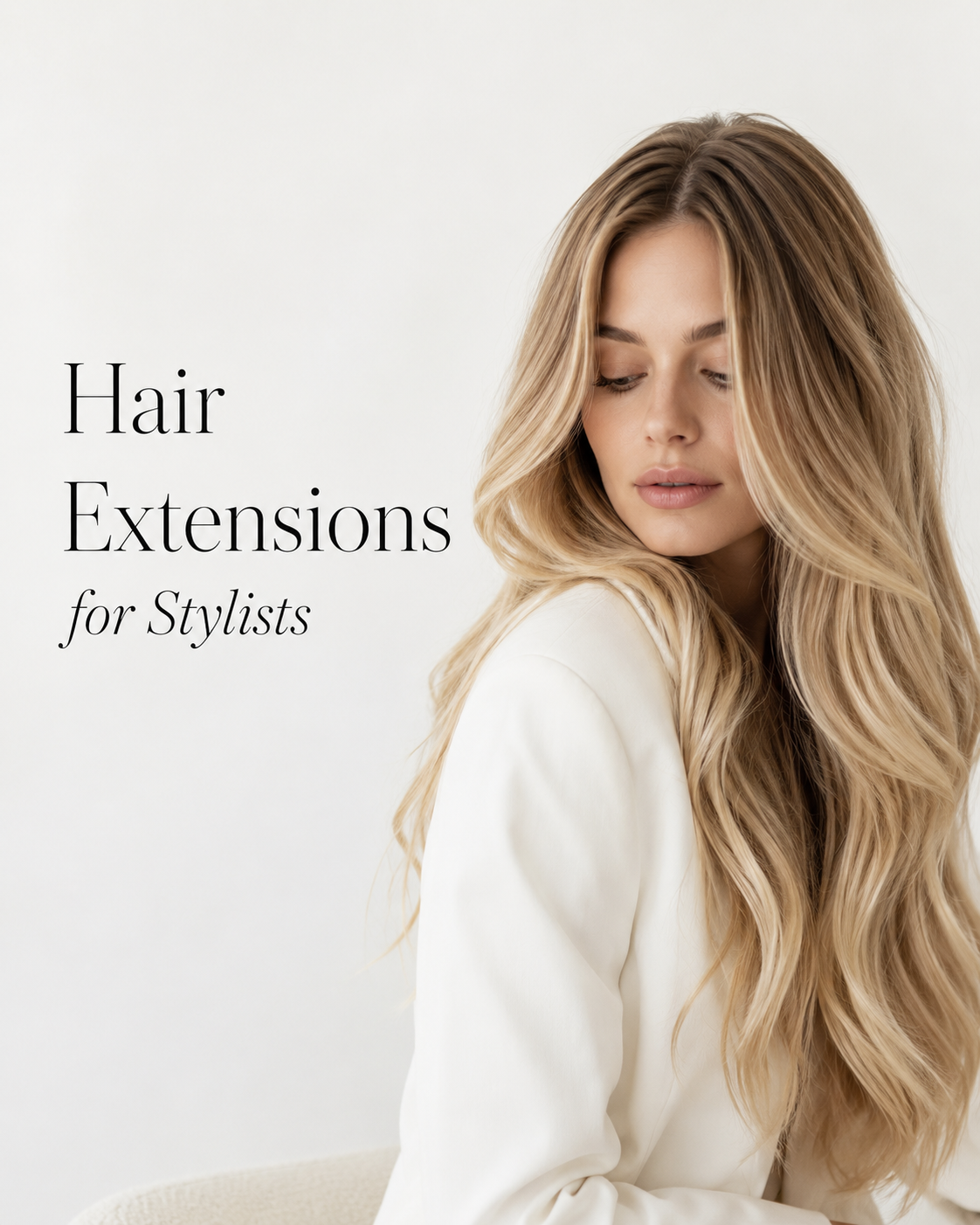
A strong paragraph here should also cover the visual result. One reason people stay interested in keratin fusion hair extensions is that the bonds are small, and the finished look often feels more natural in motion. The hair can move more freely because the extensions sit in individual strands rather than broad panels. That makes this method especially appealing for clients who want a natural flow, soft layering, and less obvious attachment points.
To make the section more useful, include one practical point: keratin fusion extensions are not a casual, quick beauty hack. They are a professional method that requires time, training, and maintenance. That sets the tone for the rest of the article and helps readers understand that this is a long-term service rather than a temporary styling tool.
2. Types of Keratin Fusion Hair Extensions: U-Tip, I-Tip, and Flat Tip Explained
This section should help readers understand that not all fusion extensions look or perform the same way. Many people use “keratin fusion hair extensions” as a general label, but in practice, different bond types create different installation methods, comfort levels, and finished results. This is where the blog starts feeling genuinely educational rather than surface-level.
Start with U-tip extensions. Explain that U-tip extensions come pre-bonded with a keratin tip shaped somewhat like a small “U” or nail tip. A stylist melts the bond with a heat connector, then shapes it around the natural hair. These are probably what many people picture first when they hear “keratin fusion.” U-tip extensions tend to create a firm, long-lasting bond and are often used when clients want classic hot fusion results with durability and strong hold.
Then move into I-tip extensions, but explain them carefully because readers often confuse them with keratin fusion. I-tip extensions usually do not require melting with heat in the same way U-tips do. Instead, they often attach with micro rings or beads. If you include I-tips in this article, the best approach is to explain that people often group them into the broader conversation around strand-by-strand extensions, but the installation method differs. That distinction matters because it prevents the blog from sounding inaccurate. You can say that while I-tips offer a similar individual-strand effect, they belong more to the cold-fusion or bead-based category than classic heat-bonded keratin fusion.
Next, explain flat tip extensions. These usually combine features from both U-tip and I-tip systems. They often have a flatter bond shape, which can help the extension sit closer to the head and distribute weight more evenly. That makes flat tips appealing for clients who want a discreet result with less bulk at the attachment point. In some cases, flat tips work well for finer hair because the bond can lie more flush instead of creating a rounder bonded point.
After you explain each type, compare them in practical terms. Readers want to know which one feels lightest, which one looks most invisible, which one lasts longest, and which one suits different hair textures. That comparison is where the real value sits. U-tips often feel like the traditional hot fusion standard. Flat tips can feel more modern and flatter against the scalp. I-tips offer flexibility for clients who want strand-by-strand placement without heat, though they belong in a slightly different technical category.
End this section by stressing that the “best” bond depends on the client’s hair density, lifestyle, maintenance habits, and desired finish. A method that looks perfect on thick hair may feel bulky on fine hair. A bond that lasts beautifully on a careful client may slip or tangle on someone who ignores aftercare. That kind of nuance makes the article stronger and more trustworthy.
3. Who Should Choose Keratin Fusion Hair Extensions (And Who Shouldn’t)
This section should answer one of the most important real-world questions: who is actually a good candidate for keratin fusion hair extensions? A lot of blogs stop at “they’re great for volume and length,” but readers need more than that. They need help deciding whether this method fits their hair, budget, routine, and expectations.
Start with the ideal candidate. Keratin fusion extensions usually work best for someone who wants a long-wear method with a very natural finish and who does not mind spending more time and money on installation and upkeep. They often suit clients who want movement, flexibility, and a more customized placement than tape-ins or wefts can offer. This can include people who want subtle fullness around the face, balanced density through the sides, or detailed color blending without obvious extension panels.
Then discuss hair type and density. Clients with medium to thick hair often handle keratin fusion well because they can support the weight of individual bonds more comfortably. Clients with healthy hair and decent density at the root usually get the best results because the stylist has enough support for proper sectioning and attachment. If the hair is extremely fragile, very sparse, heavily shedding, or severely chemically compromised, keratin fusion may not be the smartest choice. That does not mean it never works for finer hair, but it does mean that proper evaluation matters.
This section should also explain who might not be a good fit. Someone with a very sensitive scalp, a very low pain tolerance for long appointments, or a poor track record with maintenance may struggle with this method. Keratin fusion extensions are not ideal for clients who want a fast install, a low-cost service, or an easy at-home removal process. They are also risky for people who constantly pull, twist, over-style, or neglect their hair. If someone rarely brushes carefully, sleeps with wet hair, skips salon check-ins, or refuses to use extension-safe products, problems usually show up fast.
Another useful angle here is lifestyle. Keratin fusion extensions often suit clients who wear their hair down often, want a very natural look in ponytails and movement, and are willing to follow care rules. But for someone who works out heavily every day, shampoos constantly, or needs maximum speed and convenience, another method may be more practical. If the reader is a stylist, this section can also help them think through client consultations more intelligently.
End this point by reinforcing that good results do not come from choosing the most popular method. Good results come from matching the method to the person. That is an important perspective because it shifts the conversation from trend-chasing to professional decision-making.
4. Pros and Cons of Keratin Fusion Hair Extensions You Should Know First
This section should feel balanced, honest, and practical. Readers do not need a sales pitch. They need a realistic look at what keratin fusion hair extensions do well and where they become difficult. If this section sounds too glowing, trust drops. If it sounds too negative, the article feels biased. The sweet spot is a clear breakdown of trade-offs.
Start with the pros. One of the biggest advantages is the natural appearance. Because the extensions attach in small strand-by-strand bonds, the finished result can look more seamless and move more like natural hair than some bulkier methods. The placement can also be highly customized. A stylist can add volume exactly where the client needs it, soften the perimeter, build length in a balanced way, or target sparse areas without installing large panels across the head.
Another major benefit is longevity. Keratin fusion hair extensions often last longer than temporary methods when installed and maintained correctly. That makes them attractive to clients who want a full-time transformation rather than hair they clip in and remove every day. The bonds are also quite discreet when done well, which helps with styling versatility. Many clients like that they can wear their hair up, half-up, or down with less fear of obvious tabs or weft tracks showing.
Now move into the cons, and be direct. Installation takes time. This is not a quick salon appointment. Depending on the amount of hair, the process can take several hours, and that alone makes it a bigger commitment than many first-time clients expect. Cost is another factor. The method usually sits in a higher price range because it combines labor, technical skill, and premium extension hair.
Then address the issue everyone wonders about: damage. Keratin fusion hair extensions can absolutely cause damage when they are applied badly, placed incorrectly, installed on weak hair, overheated, neglected, or removed carelessly. This point needs to sound specific rather than dramatic. The method itself is not automatically destructive, but it is not foolproof either. Poor technique can stress the roots, weaken the hair shaft, and lead to breakage or traction issues.
Maintenance also belongs in the cons section. Clients need to brush carefully, separate bonds with their fingers if needed, avoid oily products near attachments, and commit to proper salon removal. The method asks for discipline. Anyone hoping for glamorous hair with no effort may end up disappointed.
A strong ending for this section would say that keratin fusion offers beautiful, long-lasting results, but it demands the kind of patience and care that not every client wants to give. That sentence captures the core truth of this method.
5. How Long Do Keratin Fusion Hair Extensions Last in Real Life?
This section should answer a question that almost every reader will have, but instead of giving a flat number and moving on, explain what actually affects lifespan. That makes the content more useful and more believable.
Start with the general expectation. In real life, keratin fusion hair extensions often last around 3 to 5 months, sometimes longer depending on the hair, the bond quality, the stylist’s technique, and the client’s maintenance. But avoid presenting lifespan as a guarantee. Readers need to understand that extensions do not all age the same way. Two clients can leave the same salon with the same method and have very different outcomes a few months later.
Then explain the factors that control longevity. One major factor is installation quality. If the stylist uses clean sectioning, correct bond size, proper heat control, and smart placement, the extensions usually last better and feel more comfortable. If the bonds are too large, too close to the scalp, too heavy for the section, or poorly rolled, the lifespan drops and discomfort rises.
Another factor is hair growth. Since natural hair keeps growing, the bonds gradually move farther away from the scalp over time. That means even if the bond stays intact, it will not look or feel ideal forever. At some point, the extensions become harder to manage because they sit lower, tangle more easily, and create more stress if the client waits too long for removal.
Aftercare deserves a detailed explanation here too. Clients who brush correctly, wash gently, sleep with their hair secured, and avoid heavy oils near the bonds usually get better wear time. Clients who skip brushing, let the roots mat, sleep with wet hair, or overload the bonds with slippery products often shorten the lifespan dramatically.
This section should also mention that “lasting longer” does not always mean “better.” Sometimes clients brag that they kept fusion extensions in for far too long, but that is not a success story. Once the hair grows out too much, the bonds can twist, tangle, and put uneven pressure on the natural hair. So the better message here is not to chase the longest possible wear, but to keep the extensions in the healthy wear window.
Finish this point by stressing that the best results come from treating keratin fusion like a scheduled professional service, not something to leave in until it becomes unmanageable.
6. Step-by-Step: How Keratin Fusion Hair Extensions Are Installed
This section should walk readers through the process in a way that feels clear and visual. Even if the reader never plans to install them personally, understanding the process helps them judge whether the method sounds right for them and helps stylists explain the service better.
Start with the consultation stage. Explain that a proper install should not begin the second a client sits down. A stylist first needs to assess hair density, condition, scalp health, texture, color match, desired length, and how much extension hair the look will actually require. This matters because keratin fusion is highly customizable, and poor planning at the start often leads to bad results later.
Next, describe the sectioning process. The stylist divides the hair into clean, controlled areas so the bonds can sit evenly and remain hidden. Good sectioning is not just about neatness. It affects comfort, weight distribution, movement, and how natural the final result looks. If the sections are sloppy or inconsistent, the bonds can become bulky, visible, or stressful on the natural hair.
Then explain the bonding step. The stylist takes a small piece of natural hair, lines it up with the keratin-tipped extension, softens the keratin with a heat connector, and then rolls or shapes the melted bond around the natural hair. This part should sound precise, because it is. Too much heat can over-process the bond or stress the hair. Too little heat can create a weak bond that slips. The position of the bond also matters. It needs enough space from the scalp for movement, but not so much that it hangs awkwardly.
After that, talk about repetition and placement strategy. A full head requires many individual bonds, and placement changes depending on the client’s goal. If the client wants fullness only, fewer strands may be placed strategically. If the client wants major length and volume, the stylist will install many more. This part helps readers understand why the service takes so long and why pricing often runs high.
Include a paragraph on blending and cutting. Installation alone does not finish the look. A stylist often needs to shape, layer, and blend the extension hair so it merges naturally with the client’s haircut. Without that step, even expensive hair can look obvious.
End the section with a realistic note: keratin fusion installation is not a beginner-friendly DIY project. The method requires technical judgment, heat control, and a trained eye. That point adds practical value and protects the reader from oversimplified expectations.
7. How to Care for Keratin Fusion Hair Extensions Without Damaging Your Hair
This section should be one of the most useful in the whole blog because aftercare often decides whether a beautiful install stays beautiful. Readers need practical guidance here, not generic reminders.
Begin with brushing. Explain that clients need to brush keratin fusion hair extensions carefully and consistently. A soft extension brush or loop brush usually works best because it helps detangle without snagging the bonds. The key is to support the hair with one hand and brush in sections, starting from the ends and working upward. Ripping a brush from roots to ends is one of the fastest ways to create tension and breakage.
Then move to washing. Clients should wash gently, keep the scalp clean, and avoid rough circular scrubbing that can tangle the bonds together. Product placement matters too. Heavy conditioners, oils, and masks should stay away from the bonded area because overly slippery roots can weaken attachment points. The mid-lengths and ends usually need moisture more than the bond zone does.
Sleeping habits deserve their own paragraph because they affect wear more than many people realize. Going to bed with wet or damp extension hair is a bad idea because it increases tangling and matting near the bonds. Securing the hair in a loose braid or low ponytail before sleep usually helps reduce friction. A silk or satin pillowcase can also help reduce dryness and friction, though it does not replace proper hair prep at night.
Heat styling should also be explained clearly. Clients can usually curl or straighten the hair, but they need to avoid pressing hot tools directly against the keratin bonds. Too much heat at the bond site can soften or weaken the attachments. That point sounds obvious to professionals, but many clients do not think about it until damage starts.
This section should also cover routine bond checks. Clients should separate bonds with their fingers if they notice them starting to clump together. They should also watch for tangling at the root and book removal or maintenance on time instead of waiting until everything feels unmanageable. Good aftercare is not just about making the extensions look pretty. It is about protecting the natural hair underneath.
A strong closing point here would be that the healthiest extension experience usually comes from small daily habits, not dramatic rescue treatments after things go wrong.
8. Keratin Fusion Hair Extensions vs Tape-Ins vs Wefts: Key Differences
This section should help readers place keratin fusion into the bigger extension world. Many people do not choose extensions by asking, “What is the best method?” They choose by asking, “What is the best method for me?” Comparison content helps answer that.
Start by comparing keratin fusion hair extensions and tape-ins. Keratin fusion gives a more strand-by-strand, customized result, while tape-ins install in sandwich-like panels. Tape-ins usually install faster and cost less in labor, which makes them appealing for clients who want efficiency. But keratin fusion can offer more detailed placement and a more flexible, natural movement in certain hairstyles. Tape-ins may work well for clients who want a flatter, quicker install. Keratin fusion often suits clients who want highly tailored placement and longer wear.
Then compare keratin fusion and wefts. Wefts usually come in rows and attach through sewing, beading, or similar methods depending on the system. They can create great volume quickly and often work well for clients with enough density to support rows. But they do not offer the same strand-by-strand precision as fusion. Keratin fusion can feel lighter and more customized around the face and crown, while wefts may feel more efficient for full-bodied transformations on thicker hair.
This section should also compare the methods in terms of installation time, maintenance, visibility, reusability, and damage risk. Tape-ins install faster. Wefts can cover a lot of area efficiently. Keratin fusion takes longer but offers precision. Tape-ins often need move-ups. Wefts need maintenance as the rows grow out. Keratin fusion usually stays in until removal rather than being moved up in the same way. Some weft and tape methods allow easier hair reuse, while classic keratin fusion often involves replacing or re-tipping hair depending on the system and condition.
Damage risk deserves nuance here too. None of these methods are automatically safe or automatically damaging. The real issue is suitability and technique. Tape-ins can stress weak hair if the tabs are too heavy. Wefts can strain the scalp if rows are too tight or too large. Keratin fusion can cause breakage if the bonds are too hot, too bulky, or left in too long. That balanced view makes the comparison more helpful and more realistic.
End by helping the reader think through priorities. If they care most about speed, tape-ins may make sense. If they want row-based fullness, wefts may fit better. If they want detailed placement, natural movement, and long wear, keratin fusion may stand out.
9. Common Mistakes with Keratin Fusion Hair Extensions (And How to Avoid Them)
This section gives the article a more expert tone because it goes beyond basic explanation and starts addressing what actually goes wrong in real life. That kind of content is useful for both clients and newer stylists.
Start with poor section sizing. One of the biggest mistakes in keratin fusion installation is attaching too much extension hair to too little natural hair, or vice versa. If the section cannot support the bond, stress builds at the root. If the section is too large for the extension strand, blending and movement suffer. Explain that balance matters. The natural hair and the extension strand need to match in a way that supports comfort and longevity.
Next, discuss incorrect placement. Bonds that sit too close to the scalp can feel tight, painful, and restrictive. Bonds placed too far away can swing, twist, and tangle faster. Placement also matters visually. If the stylist installs extensions too high, too close to the hairline, or too shallow in sparse areas, the bonds can become visible. That hurts both comfort and appearance.
Then cover overheating the keratin. This is a technical error with real consequences. Too much heat can over-soften the bond, create messier attachment points, and potentially stress the natural hair. A good stylist does not simply melt everything aggressively and hope for the best. Heat control needs precision.
Another common mistake is ignoring client suitability. Not every client should get keratin fusion, and trying to force the method onto weak, damaged, over-lightened, or very sparse hair often ends badly. This mistake does not happen only during installation. It happens during consultation when someone wants the sale more than the right result.
Aftercare mistakes belong here too. Clients often cause issues by sleeping with wet hair, skipping brushing, using oily root products, or trying to pull apart tangles too aggressively. Removal mistakes are another major problem. Many people damage their hair not during wear, but during careless takedown. Trying to force bonds out without the correct remover, pliers, and patience can lead to serious breakage.
End this section with a practical message: most extension disasters do not come from the method alone. They come from shortcuts, poor matching, weak technique, and neglect. That insight helps the reader understand that success depends on details.
10. How Much Do Keratin Fusion Hair Extensions Cost and Why?
This final section should unpack pricing in a way that feels honest and useful. Readers often see a big price tag and assume the salon is overcharging, but keratin fusion is one of those services where cost reflects multiple layers of work.
Start by explaining that the total cost usually includes the hair itself, the installation labor, the stylist’s skill level, the appointment length, the amount of hair needed, and often the cut/blending work afterward. This is not just a hair purchase. It is a technical service. Once readers understand that, the pricing starts making more sense.
Then explain how the amount of hair changes the quote. A client who wants subtle fullness around the sides may need far less hair than someone who wants dramatic added length and full density. Hair length also affects price. Longer extension hair usually costs more, and premium human hair costs more than lower-grade alternatives. If the hair quality is poor, the service may cost less upfront but create more frustration later.
Labor deserves a separate explanation because keratin fusion is time-intensive. A full install can take several hours, sometimes much longer depending on the amount of hair and the stylist’s method. That time is skilled labor, not idle waiting. The stylist is sectioning, bonding, checking placement, balancing weight, and blending the result. This is one reason the method usually costs more than faster extension systems.
You should also mention maintenance and removal costs. Some clients focus only on the install price and forget that removal also takes time and skill. A healthy extension experience includes professional removal, and that should factor into the overall budget. If the client needs reinstalling, fresh hair, or re-tipping, the costs shift again.
A practical angle here would be to explain that the cheapest option often becomes the most expensive if the hair quality is bad or the install causes damage. This is especially true with fusion methods, where poor technique can create costly correction work later.
End with a realistic conclusion: keratin fusion hair extensions are an investment. They make sense for clients who want detailed, long-lasting, natural-looking results and are willing to pay for both the artistry and the upkeep. They make far less sense for someone who wants fast, cheap, and low-maintenance hair.