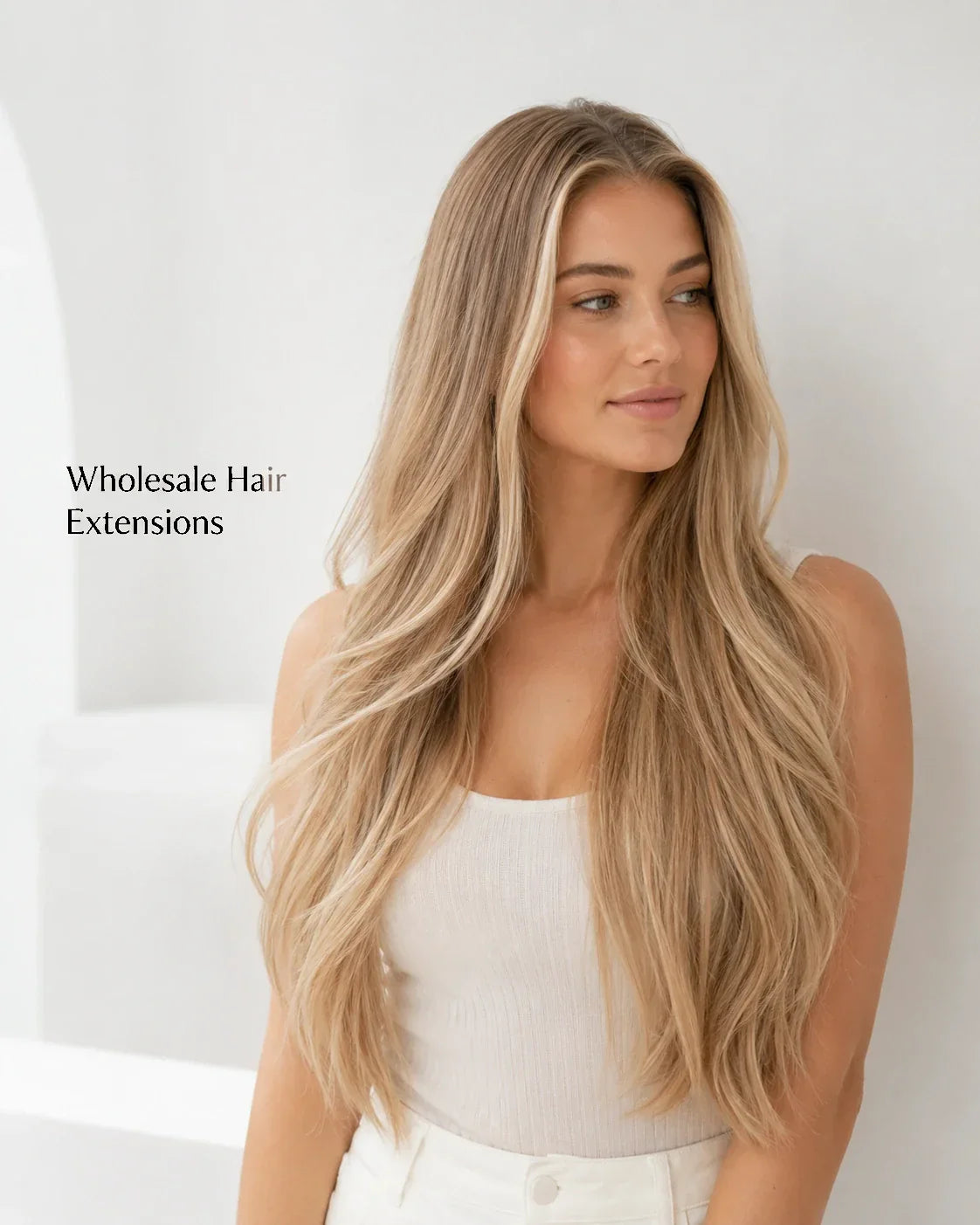
Hair Extensions for Stylists: Methods, Hair Quality, and How to Choose the Right Supplier
If I had to simplify hair extensions for stylists into one decision, I would say this: choose a system that fits both the client’s hair and your workflow.
Hair extensions for stylists refer to professional-grade extension systems designed for salon use, focusing on installation efficiency, hair durability, and repeatable results across clients.
In real salon work, I don’t just look at how the hair appears right after installation. I care about how it behaves after two weeks, after multiple washes, and after the client starts styling it daily. I also care about whether I can deliver the same result for the next client without adjusting everything again.
When those factors line up, extensions become predictable. When they don’t, they turn into constant fixes.
What Hair Extensions for Stylists Actually Mean in a Salon Setting
Hair extensions are not just a transformation service. I treat them as a structured, repeatable system.
Every time I decide on a method, I run through the same checklist:
-
How long will this installation take from start to finish?
-
Will the result look consistent from different angles and lighting?
-
Can I reinstall the same hair without noticeable quality loss?
-
Will the client realistically follow the maintenance routine?
For example, a method that looks perfect on day one but tangles after three washes creates more work than value. I avoid anything that creates unpredictable follow-ups.
How to Choose Hair Extensions for Stylists Based on Client Hair Type
I always begin with the client’s natural hair, not the extension method.
Fine Hair Clients
Fine hair exposes every mistake. I choose tape-ins because:
-
They sit flatter against the scalp
-
They distribute weight evenly
-
They reduce visible attachment points
If I overload fine hair or choose a bulky method, the blend breaks immediately.
Medium Hair Clients
This is the most flexible category.
I decide based on the client’s goal:
-
For faster installs and maintenance → tape-ins
-
For more volume and structure → wefts
This is where I balance efficiency and visual impact.
Thick Hair Clients
Thick hair requires stronger structure.
I choose:
-
Wefts for volume and density
-
Keratin bonds when I need precise placement and movement
If I use lightweight methods here, the result often lacks fullness.
Fragile or Chemically Processed Hair
I reduce tension as much as possible.
I avoid:
-
Heavy wefts
-
Tight bead placements
I prioritize methods that protect the natural hair over visual density.
Key Takeaways:
-
Hair type determines the method
-
Weight distribution matters more than attachment style
-
The wrong match creates long-term issues, not just visual problems
Hair Extensions for Stylists: Tape-Ins vs Keratin Bonds vs Wefts
Each system solves a different problem. I don’t treat them as interchangeable.
Tape-In Extensions
Tape-in extensions are the most efficient option for stylists who need speed and repeatability.
I use them when:
-
I need to complete installs quickly
-
I want predictable maintenance cycles
-
I work with fine to medium hair
From experience:
-
Clean sectioning determines how invisible they look
-
Tape quality affects how well they hold between appointments
-
Proper spacing prevents stiffness at the root
Tape-ins allow me to handle more clients without sacrificing consistency.
Keratin Bond (Fusion) Extensions
Keratin bonds give me the most control over placement.
I use them when:
-
The client wants highly customized blending
-
I need to distribute weight across specific areas
-
The client prefers long-term wear without frequent adjustments
What matters here:
-
Bond size must match the natural hair density
-
Placement affects movement and comfort
-
Heat control affects durability
This method requires more time, but it delivers a more tailored result.
Weft Extensions (Hand-Tied / Genius / Machine)
Wefts give me structure and density that other methods cannot match.
I use them when:
-
The client wants fuller volume
-
I need to build a strong base
-
The natural hair can support weight
From experience:
-
Clean rows determine comfort and longevity
-
Even tension prevents lifting
-
Proper spacing avoids bulkiness
Different types serve different needs:
-
Hand-tied → better for a natural finish and less bulk
-
Genius wefts → easier to customize and cut
-
Machine wefts → more durable for heavy-use clients
Key Takeaways:
-
Tape-ins = efficiency and scalability
-
Keratin bonds = precision and customization
-
Wefts = structure, density, and long-term stability
What Makes High-Quality Hair Extensions for Stylists
Hair quality shows its true value after repeated use, not on the first day.
I evaluate hair based on how it performs over time.
Cuticle Alignment
When cuticles stay aligned:
-
The hair remains smooth
-
Tangling reduces significantly
-
Brushing becomes easier
Misaligned cuticles create friction, which leads to matting.
Density (Double Drawn)
Thicker ends create a clean finish.
If the ends look thin:
-
The blend looks unfinished
-
The client notices the difference quickly
Processing Control
Less aggressive processing keeps the hair stronger.
Over-processed hair:
-
Loses moisture faster
-
Becomes rough after washing
-
Requires more maintenance effort
Source Consistency
Consistency matters more than a single good batch.
When I evaluate suppliers, I focus on:
-
Whether the hair comes from controlled sourcing
-
Whether batches remain consistent across orders
Hair that comes directly from organized collection—rather than mixed supply—performs more predictably, especially for lighter shades and double drawn structures.
Key Takeaways:
-
Long-term performance defines quality
-
Thickness and durability matter more than labels
-
Consistent sourcing improves service reliability
How Stylists Choose Hair Extensions (Simple Decision Framework)
When I need to make fast decisions, I follow this logic:
-
Need speed → choose tape-ins
-
Need long-term wear → choose keratin bonds
-
Need volume and structure → choose wefts
-
Working with fine hair → reduce weight and bulk
-
Working with thick hair → distribute weight evenly
This framework helps me stay consistent without overthinking every case.
How Much Hair Do You Need? Use Grams for Accuracy
I always measure in grams because it gives consistent results.
-
Fine hair → 80–120g
-
Medium hair → 120–180g
-
Thick hair → 180–240g
Using grams helps me:
-
Control density
-
Maintain balance
-
Avoid unnecessary weight
Longevity and Maintenance: What I Explain Before Installation
I set expectations before I start the service.
Typical timelines:
-
Tape-ins → reinstall every 6–8 weeks
-
Keratin bonds → last around 3–4 months
-
Wefts → maintenance every 6–10 weeks
-
Hair lifespan → 6–12 months with proper care
I also explain clearly:
-
Product choice affects durability
-
Brushing technique prevents tangling
-
Oil placement affects bond strength
Clients who understand maintenance usually return with better results.
Key Takeaways:
-
Clear expectations reduce follow-up issues
-
Maintenance habits affect longevity
-
Education improves retention
Common Mistakes Stylists Make with Hair Extensions
These mistakes create most long-term problems.
Choosing Based on Price Alone
Low-cost hair often leads to inconsistent texture and more correction work.
Overloading Fine Hair
Too much weight causes tension, discomfort, and visible installs.
Inconsistent Sectioning
Uneven sections lead to poor blending and uneven movement.
Ignoring Client Lifestyle
Clients who work out frequently or wash often need different planning.
Key Takeaways:
-
Small technical mistakes compound over time
-
Planning matters as much as execution
-
Understanding the client prevents most issues
FAQ: Hair Extensions for Stylists
What are the best hair extensions for stylists?
Tape-in extensions are the most versatile option because they provide fast installation, easy reapplication, and compatibility with most hair types.
Are tape-in extensions safe for clients?
Yes. I see consistent results when I control placement, weight, and removal technique carefully.
How long do professional hair extensions last?
The hair can last 6–12 months, while installation methods require maintenance every few weeks or months depending on the system.
How do I choose a reliable supplier?
I focus on consistency across multiple orders and evaluate performance after repeated use.
What matters more: method or hair quality?
Hair quality matters more because poor hair reduces the effectiveness of any installation method.
Final Thoughts: What Actually Makes Hair Extensions Work in a Salon
Hair extensions work when the system behind them works.
When I match the method to the client, use consistent-quality hair, and follow a structured workflow, I see:
-
Faster installations
-
More predictable results
-
Higher client retention
At that point, extensions stop feeling like a technical challenge and start becoming a reliable part of salon growth.